

The reality is much simpler. Physical wellness is largely about taking reasonable care of your body through habits you can actually maintain. You don’t need to transform your entire life overnight. Small improvements—walking a little more, eating more balanced meals, sleeping better, moving regularly, and paying attention to how your body feels—can gradually make everyday life feel better.
In 2026, with busy schedules, long screen hours, desk-based work, and increasingly convenient lifestyles, taking care of physical health can sometimes require a little more intention.
The good news is that wellness doesn’t have to be complicated.
What Is Physical Wellness?

Physical wellness is the practice of caring for your body and supporting your overall physical health.
It includes much more than exercise.
Your daily movement, food choices, sleep, hydration, personal hygiene, posture, recovery, and healthcare habits all have a place in physical wellness.
Think of it as a collection of everyday decisions rather than a single fitness goal.
You don’t have to become extremely athletic to have good physical wellness.
Someone who walks regularly, eats a reasonably balanced diet, gets enough rest, and takes care of their health can be practicing physical wellness just as meaningfully as someone who spends hours in a gym.
Why Physical Wellness Matters
Your physical health affects ordinary parts of your day.
How easily you get through a busy afternoon.
Whether you have enough energy to go for a walk after work.
How comfortably you sleep.
How your body feels after sitting at a desk.
Whether you can enjoy a weekend activity without feeling completely exhausted.
These things may seem small, but they add up.
Looking after your body isn’t only about preventing future problems. It can also be about making everyday life more comfortable and enjoyable.
Start With Movement, Not an Extreme Workout
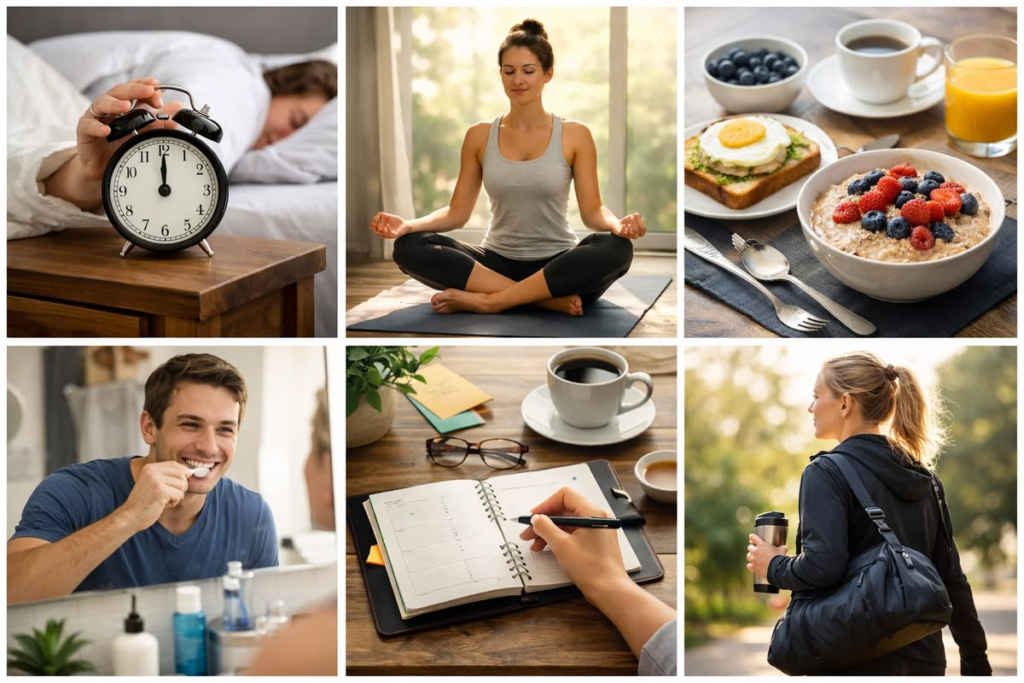
One of the easiest mistakes people make is assuming that physical wellness starts with an intense workout routine.
It doesn’t.
Movement is the important part.
If you spend most of the day sitting, adding more movement throughout the day can be a practical starting point.
Take a short walk.
Stand up between long periods of sitting.
Use stairs when it makes sense.
Stretch after working for a while.
Walk while talking on the phone.
Play a sport.
Dance at home.
The activity doesn’t have to look like a traditional workout to count as movement.
Find Exercise You Actually Enjoy
This sounds obvious, but it is one of the most useful pieces of fitness advice.
If you hate running, you don’t have to become a runner.
If gyms make you uncomfortable, you don’t have to build your entire routine around a gym.
Try different activities until something feels enjoyable enough to repeat.
You might prefer:
- Walking
- Cycling
- Swimming
- Dancing
- Yoga
- Strength training
- Hiking
- Team sports
- Home workouts
- Recreational activities
The “best” exercise is often the one you are willing to keep doing.
Build Strength Gradually
Strength isn’t only about lifting heavy weights.
Strong muscles can support everyday movement, posture, balance, and physical independence.
If you’re new to strength training, start with basic movements and learn proper technique rather than immediately trying to lift as much as possible.
Bodyweight exercises can also be a useful starting point.
You can gradually increase difficulty as your confidence and fitness improve.
And remember: progress doesn’t have to happen every single week.
Some weeks will be better than others.
That’s normal.
Don’t Ignore Flexibility and Mobility
Strength and cardiovascular fitness often receive most of the attention, while flexibility and mobility are forgotten.
Your body needs to move comfortably too.
Simple stretching or mobility work can become part of your routine, particularly if your day involves a lot of sitting.
You don’t need a complicated routine.
A few minutes of gentle movement can be enough to remind your body that it isn’t supposed to remain in one position all day.
If a movement causes pain rather than ordinary stretching discomfort, stop and seek appropriate professional advice.
Pay Attention to Your Posture
Modern life can be surprisingly hard on posture.
Hours spent looking at a laptop, working at a desk, driving, or scrolling on a phone can leave your body in the same position for long periods.
Instead of trying to maintain a perfectly rigid posture all day, focus on changing positions regularly.
Adjust your chair and screen where possible.
Keep your workspace comfortable.
Get up periodically.
Move your shoulders and neck gently.
And don’t underestimate the value of simply standing up and walking around.
Sometimes your body isn’t asking for a complicated solution.
It is asking you to move.
Food Is Part of Physical Wellness

Healthy eating doesn’t have to mean following the latest diet trend.
A sustainable approach usually starts with variety and balance.
Try to include a mixture of foods that provide protein, carbohydrates, healthy fats, fiber, vitamins, and minerals.
Fruits and vegetables can add nutrients and fiber.
Whole grains can provide carbohydrates and fiber.
Protein-rich foods support many functions in the body.
Healthy fats can be part of a balanced diet as well.
The exact combination will differ from person to person.
Your dietary needs, preferences, culture, budget, activity level, and health circumstances all matter.
Stop Thinking of Food as “Good” or “Bad”
Food can become unnecessarily complicated when every meal is judged as healthy or unhealthy.
One meal doesn’t define your diet.
Having dessert doesn’t mean you’ve ruined your progress.
Eating vegetables doesn’t automatically make every other food you eat irrelevant.
A healthier relationship with food involves looking at your overall pattern rather than judging yourself over individual choices.
Consistency matters more than perfection.
Make Hydration a Daily Habit
Water is easy to overlook when you’re busy.
You may get through half the day before realizing you haven’t had much to drink.
Keep water accessible.
Carry a bottle when you’re out.
Drink with meals.
And pay attention to your body’s signals, especially during hot weather or physical activity.
Your hydration needs can vary depending on factors such as climate, activity, diet, and individual circumstances.
You don’t need to turn drinking water into a competition.
Just make it part of your normal routine.
Sleep Is Not Optional Recovery Time
Sleep is one of the most underestimated parts of physical wellness.
People often treat sleep as the first thing they can sacrifice when life becomes busy.
But your body needs recovery.
A consistent sleep routine can help make adequate rest easier to achieve.
Try to maintain reasonably regular sleep and wake times.
Create a bedroom environment that supports sleep.
Reduce unnecessary distractions before bed.
And give yourself enough time to actually sleep rather than simply getting into bed late and hoping for the best.
If you regularly struggle with sleep despite making changes, consider discussing it with a healthcare professional.
Create a Better Evening Routine
You don’t need a complicated nighttime ritual.
A simple routine can be enough.
Finish your work.
Dim the lights.
Put your phone aside for a while.
Take a shower.
Read something relaxing.
Prepare things for the next morning.
Go to bed at a consistent time.
The goal isn’t to create a picture-perfect wellness routine for social media.
The goal is to give your body a predictable signal that the day is winding down.
Manage Stress Through Physical Habits
Stress is often discussed as a mental wellness issue, but it can affect the way your body feels too.
When you’re stressed, you may sleep poorly, move less, eat differently, or spend more time sitting.
Physical activity can be one useful way to create a break in that cycle.
A walk after work can give you time away from a screen.
Stretching can create a few quiet minutes during a busy day.
Exercise can become an outlet rather than another item on your to-do list.
You don’t have to exercise intensely for movement to feel refreshing.
Sometimes a quiet twenty-minute walk is exactly what you need.
Take Breaks From Screens
Screens are part of modern life.
Work, communication, entertainment, shopping, banking, learning—so much happens through a screen.
The problem isn’t necessarily using technology.
It’s staying in one position for hours without moving.
Try creating natural breaks.
Stand during a phone call.
Walk away from your desk during lunch.
Stretch between tasks.
Look away from your screen regularly.
And whenever possible, don’t let every break become another opportunity to scroll on your phone.
Spend More Time Outdoors
You don’t need to become an outdoor enthusiast to benefit from spending time outside.
A short walk around your neighborhood can be enough.
Go to a park.
Sit outside with your morning drink.
Take a weekend walk.
Spend time gardening if you enjoy it.
Outdoor time can also make movement feel less like exercise because you’re doing something rather than simply counting minutes.
Build a Routine That Fits Your Real Life
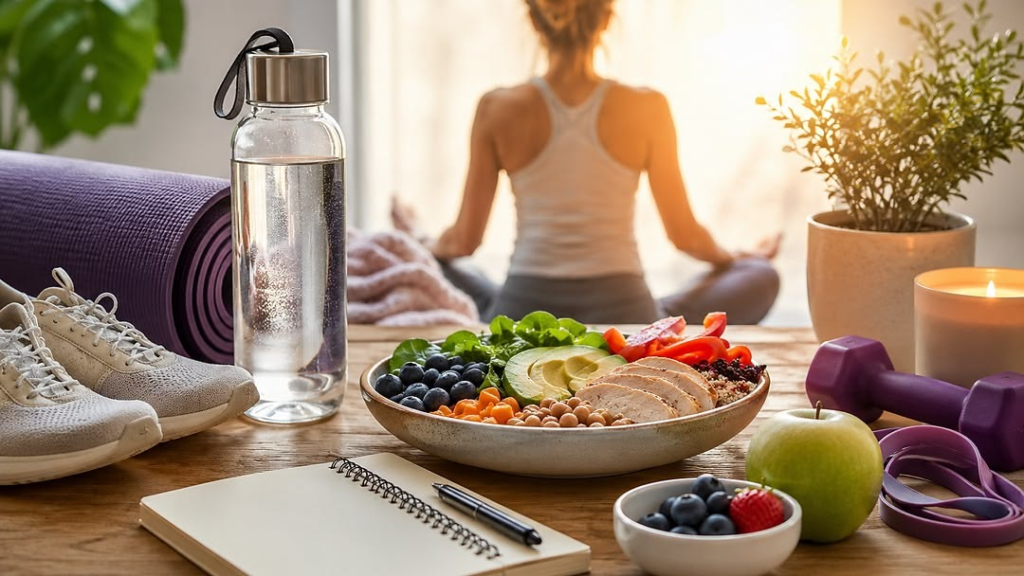
This may be the most important point in the entire guide.
Your wellness routine has to fit your actual life.
If you work long hours, have family responsibilities, commute, study, or simply don’t have much free time, a two-hour daily fitness routine may not be realistic.
That’s okay.
Start with what you can maintain.
Maybe you have twenty minutes.
Use twenty minutes.
Maybe you can walk during lunch.
Do that.
Maybe you can exercise three days a week rather than seven.
That’s still a routine.
A sustainable habit will usually take you further than an unrealistic plan that lasts ten days.
Don’t Compare Your Body to Someone Else’s
Social media has made it incredibly easy to compare yourself with people you don’t know.
You see someone’s fitness transformation.
Their workout routine.
Their meals.
Their body.
Their morning routine.
And suddenly your own progress feels inadequate.
But you’re comparing your ordinary day with a carefully selected piece of someone else’s life.
Physical wellness isn’t a competition.
Your goals should be based on your health, circumstances, abilities, preferences, and professional guidance when needed.
Your body doesn’t need to look like someone else’s to be worth taking care of.
Listen to Your Body
Your body gives you information all day.
Tiredness.
Hunger.
Thirst.
Muscle soreness.
Pain.
Low energy.
Feeling refreshed after sleep.
Feeling better after movement.
Learning to notice these signals can help you make better decisions.
That doesn’t mean every sensation should become a reason for concern.
But persistent, severe, unusual, or worsening symptoms should not simply be ignored.
When something doesn’t feel right, appropriate medical advice is more useful than guessing from social media.
Schedule Preventive Healthcare
Wellness isn’t only about what you do at home.
Routine healthcare matters too.
Depending on your age, sex, family history, and individual circumstances, preventive care may include regular medical checkups, recommended screenings, dental care, vaccinations, and other healthcare appointments.
Don’t wait until something feels seriously wrong before paying attention to your health.
Preventive care is part of looking after yourself.
Create Small Habits Instead of Huge Resolutions
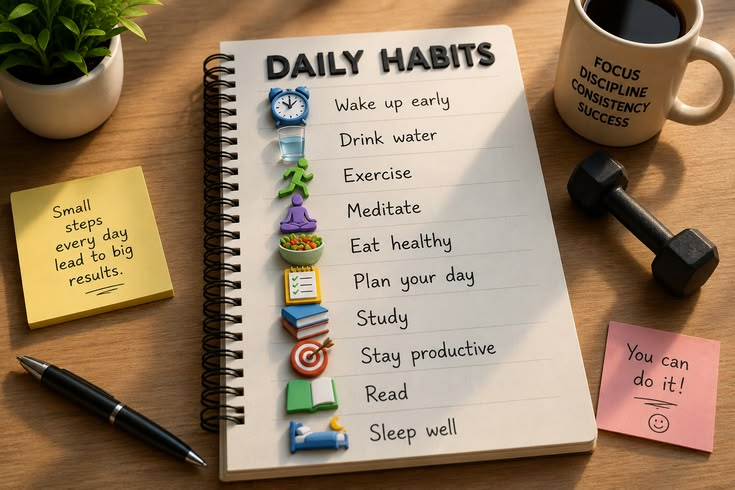
“I’m going to completely change my lifestyle” sounds motivating on January 1.
By February, it can feel impossible.
Instead, make the goal smaller.
Rather than:
“I will exercise every day.”
Try:
“I will walk for twenty minutes three times this week.”
Instead of:
“I will never eat unhealthy food again.”
Try:
“I will add a fruit or vegetable to more of my meals.”
Instead of:
“I will sleep perfectly every night.”
Try:
“I will start going to bed at a more consistent time.”
Small goals are less exciting.
They are also much easier to repeat.
A Simple Physical Wellness Routine



If you’re not sure where to start, keep things simple.
Morning
Drink some water, move your body gently, eat a nourishing breakfast if you normally eat in the morning, and give yourself enough time to start the day without rushing whenever possible.
During the Day
Break up long periods of sitting, eat balanced meals, stay hydrated, and take short movement breaks.
Evening
Reduce unnecessary screen time, have a relaxing wind-down period, and give yourself enough time for sleep.
During the Week
Include regular physical activity that you enjoy and make time for recovery.
That’s enough to begin.
You can improve the routine later.
What If You Miss a Day?
Nothing terrible happens.
This is where many wellness plans go wrong.
Someone misses a workout and decides they’ve failed.
They eat a large meal and decide the entire week is ruined.
They sleep late one night and give up on their routine.
Real life doesn’t work that way.
Missing one day is simply missing one day.
Get back to your normal habits at the next opportunity.
You don’t need to punish yourself by exercising twice as hard or restricting food the next day.
Just continue.
Physical Wellness Should Feel Sustainable
There will always be another fitness trend.
Another diet.
Another supplement.
Another workout challenge.
Another “perfect morning routine.”
You don’t need to follow all of them.
A genuinely healthy lifestyle is usually much less dramatic.
Move regularly.
Eat a varied and balanced diet.
Sleep enough.
Stay hydrated.
Take breaks.
Look after your mental well-being.
Attend appropriate healthcare appointments.
And give your body time to recover.
These habits may not look exciting on social media, but they are much more realistic for everyday life.