

Life can feel busy even when you haven’t done anything particularly unusual. You wake up, check your phone, answer a few messages, get through work or classes, deal with household responsibilities, and suddenly it is evening. Then you wonder where the whole day went.
The good news is that improving your daily life does not mean completely changing who you are or following an extremely strict schedule. Often, it comes down to a handful of small habits that make ordinary days feel a little easier.
A useful routine should fit into your actual life. It should help you stay organized without making you feel like you are constantly trying to catch up.
In 2026, that matters more than ever. With phones, notifications, work messages, social media, and endless things competing for our attention, having a little structure can make a noticeable difference.
What Does a Daily Routine Really Mean?
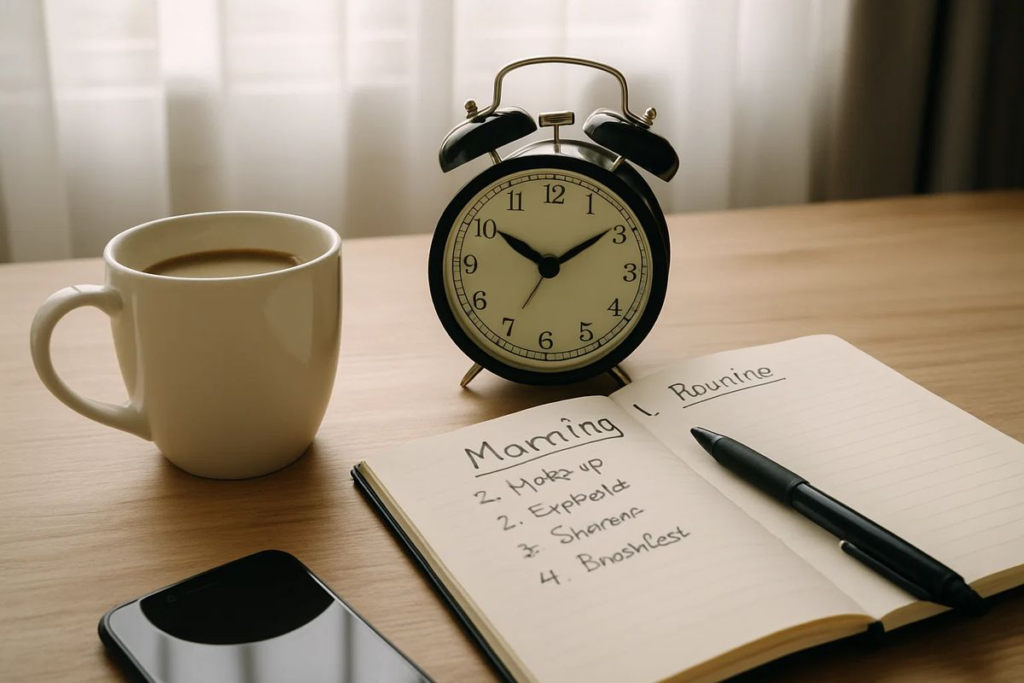
A daily routine is simply the collection of things you regularly do throughout the day.
It might include getting ready in the morning, having breakfast, going to work or college, exercising, preparing meals, spending time with family, relaxing, and getting ready for bed.
That sounds simple, but there is one important point: your routine does not have to look like anyone else’s.
A student may spend most of the day studying. Someone working from home may have meetings scattered throughout the day. A parent may have a schedule that changes depending on the needs of their family. Someone working night shifts may have an entirely different sleep and activity pattern.
So forget the idea that there is one perfect routine.
The best routine is the one that works with your responsibilities, energy levels, priorities, and lifestyle.
Why Are Daily Routines Helpful?
Without any structure, even simple responsibilities can pile up.
You might keep postponing an important task, spend too much time deciding what to do next, or become distracted by things that were never on your original plan.
A basic routine can give your day some direction.
It can help you:
- Keep track of important responsibilities
- Spend less time making small decisions
- Create space for personal interests
- Build useful habits
- Make time for rest
- Organize your day more effectively
- Remember appointments and important tasks
- Create clearer boundaries between work and personal life
But there is a catch.
A routine should not become another source of stress.
If your schedule is so strict that being ten minutes late ruins your entire day, it probably needs more flexibility.
Think of your routine as a guide, not a set of rules.
Start Your Morning Without Making It Complicated



There is a lot of pressure online to have an impressive morning routine.
Wake up before sunrise. Exercise. Meditate. Journal. Read twenty pages. Make a perfect breakfast. Plan your entire day.
That might work for some people, but it is not necessary.
A good morning can be much simpler.
Wake Up Around the Same Time
You do not need to wake up at 5 a.m. just because someone on social media does.
If you have to be awake at 7 a.m. for work or college, aim to keep your wake-up time reasonably consistent.
A predictable start can make mornings feel less rushed.
And if you occasionally sleep late? That’s life. One unusual morning will not destroy your routine.
Drink Some Water
After spending the night asleep, having some water in the morning is an easy habit to build.
Keep a bottle beside your bed or somewhere you will see it when you wake up.
It is a small thing, but simple habits are often easier to maintain than complicated ones.
Don’t Let Your Phone Take Over Your Morning
One of the easiest ways to lose the first part of your day is to check your phone “for a minute.”
Then you see a message.
Then another notification.
Then you open social media.
Before you know it, twenty or thirty minutes have disappeared.
You do not have to completely avoid your phone. Try giving yourself a little time before jumping into messages and notifications.
Even a quiet ten minutes can make your morning feel different.
Get Some Daylight
Open the curtains. Stand near a window. Step outside for a few minutes if you can.
You do not need to turn this into another complicated wellness ritual.
Sometimes simply getting outside and seeing daylight is enough to make the morning feel like it has actually started.
Choose Your Top Priorities
Instead of writing down twenty things you want to accomplish, choose two or three important tasks.
Ask yourself:
“What really needs my attention today?”
That question can help you separate important work from things that can wait.
Don’t Plan Every Minute of Your Day



A perfectly planned schedule can look fantastic on paper.
Real life is different.
A meeting takes longer than expected. Your commute gets delayed. Someone calls you. A family member needs help. You get tired. Something unexpected happens.
Suddenly, your carefully planned schedule is impossible to follow.
Instead of assigning every minute of your day a task, try dividing your day into broader sections.
Morning
Personal care, breakfast, planning, work or study.
Afternoon
Work, classes, errands, lunch and other responsibilities.
Evening
Exercise, hobbies, family time, dinner and relaxation.
Night
Preparing for tomorrow, personal care and winding down.
This gives you direction without making the entire day feel like a timetable you have to race against.
Make Your To-Do List More Realistic
A huge to-do list can sometimes make you feel productive before you have actually done anything.
You write down fifteen tasks, complete four, and spend the evening feeling like you didn’t accomplish enough.
Try sorting your tasks into three simple groups.
Must Do
Things that genuinely need to happen today.
Should Do
Important tasks that would be good to finish but can move if necessary.
Could Do
Optional tasks that are useful but not urgent.
This approach makes it easier to focus on what actually matters.
You can also break large jobs into smaller steps.
Instead of writing:
Clean the house
write:
- Put clothes away
- Clear the desk
- Wash the dishes
- Take out the trash
- Vacuum the main room
Suddenly, the task feels much more manageable.
Make Room for Your Wellbeing

A daily routine should not be nothing but work.
If your entire schedule is built around deadlines, chores, emails, and responsibilities, you eventually run out of energy.
Make room for basic habits that help you feel better.
Move a Little More
Exercise does not always have to mean spending an hour at the gym.
Walk around your neighborhood. Stretch between tasks. Take the stairs when practical. Cycle. Dance. Follow a home workout. Play a sport.
The best form of movement is often the one you actually enjoy.
If you sit for hours, even short movement breaks can help break up the day.
Don’t Treat Meals as an Afterthought
Busy days can make it tempting to skip meals or grab whatever is easiest.
Whenever possible, make meals part of your routine instead of something you squeeze in between tasks.
Simple meal planning can help, too. You don’t need to prepare an entire week’s worth of food. Even knowing what you are having for the next meal can remove one small decision from a busy day.
Give Yourself Permission to Rest
This is something people often forget.
Rest is not laziness.
Reading a book, watching a show, listening to music, talking to someone you care about, sitting outside, taking a walk, or simply doing nothing for a while can be a valuable part of your day.
You are a person, not a productivity machine.
Set Healthier Digital Boundaries

Technology makes everyday life easier, but it can also make it difficult to switch off.
A phone can be used for work, entertainment, communication, shopping, banking, navigation, news, and social media. That means there is always another reason to pick it up.
You don’t have to delete every app or disappear from social media.
Instead, create a few boundaries that make sense for you.
For example:
- Turn off notifications you don’t actually need
- Keep your phone away during meals
- Check messages at specific times
- Avoid scrolling while working or studying
- Give yourself some screen-free time before bed
- Remove apps that consistently consume more time than you want to give them
The goal isn’t to reject technology.
The goal is to make sure you decide when technology gets your attention.
Create an Evening Routine
Your evening can be a useful bridge between a busy day and a calmer night.
You might spend a few minutes:
- Preparing clothes for tomorrow
- Organizing your workspace
- Checking your schedule
- Packing your bag
- Making a short priority list
- Spending time with family
- Reading
- Listening to music
- Taking care of personal hygiene
- Reducing unnecessary screen time
You don’t have to do all of these.
Choose whatever genuinely makes your next morning easier.
For example, deciding what you will wear before going to bed might save you ten minutes of searching through your wardrobe when you are already running late.
Small preparation can remove small frustrations.
How to Make a Routine Stick

Starting a new routine is exciting.
Keeping it going after two weeks is where things get difficult.
The easiest approach is to start small.
Don’t decide that tomorrow you will wake up early, exercise for an hour, completely change your diet, read every night, meditate, stop using your phone, and reorganize your entire life.
That is a lot to maintain.
Pick one or two habits first.
Maybe your first habit is simply preparing tomorrow’s priorities before bed.
Once that feels normal, add something else.
Small changes may not feel dramatic, but they are much easier to maintain.
Make Good Habits Convenient
Want to read more?
Leave your book somewhere visible.
Want to drink more water?
Keep a bottle beside your desk.
Want to exercise in the morning?
Put your workout clothes somewhere easy to reach.
Want to remember your priorities?
Keep a notebook beside your bed.
The less effort required to begin a habit, the easier it becomes to repeat.
Connect New Habits to Existing Ones
You can also attach a new habit to something you already do.
For example:
After brushing my teeth → stretch for two minutes.
After lunch → take a short walk.
Before getting into bed → check tomorrow’s schedule.
This gives your new habit a built-in reminder.
FAQ’s
1. What is a daily routine?
A daily routine is a set of activities and habits you regularly follow throughout the day.
2. Why is having a daily routine important?
A simple routine can help organize responsibilities, reduce unnecessary decisions, and create more balance in everyday life.
3. What should a good morning routine include?
A practical morning routine can include getting up at a consistent time, drinking water, getting some daylight, and deciding your main priorities.
4. Do I need to wake up at 5 a.m. to be productive?
No. A productive routine should match your lifestyle and responsibilities rather than following a specific wake-up time.
5. How can I make my daily routine easier to follow?
Start with one or two realistic habits and gradually add more instead of changing your entire lifestyle at once.