
The best time to visit India for street food travel is from October to March, when the weather is cooler and outdoor eating is more comfortable across all regions. However, if your travel dates fall in summer, hill cities and southern coastal destinations like Kochi remain pleasant and fully operational.
A practical route for first-time food travellers is to begin in Delhi, move to Lucknow by overnight train, then travel south to Hyderabad and Kochi before returning via Mumbai. This route takes approximately 14 to 18 days and covers 6 of the 8 cities on this list. Additionally, guided culinary food tours are available in most major cities, led by local experts who explain the cultural background behind each dish. These tours are particularly useful in Delhi and Kolkata where the food areas are large and complex to navigate independently.
Chaat (Pani Puri, Bhel Puri, Dahi Puri)
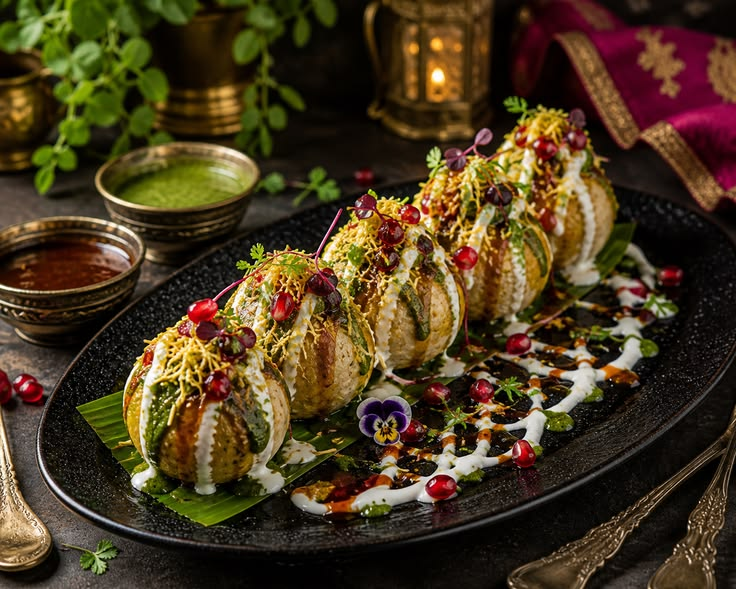
Chaat is the umbrella term, and the umbrella is huge. Pani puri (also called gol gappe or puchka depending on the city) is the entry-level thrill: a hollow crispy shell the size of a golf ball, cracked open at the top, stuffed with spiced potato and chickpeas, then flooded with a cold shot of tamarind and mint water. You eat it in one bite. If you chew, you’ve done it wrong. Bhel puri is the dry cousin, a puffed-rice mix tossed with chopped onions, tomatoes, cilantro, and sev, dressed with tangy chutneys. Dahi puri splits the difference: crisp shells filled with potato, drenched in cold sweet yogurt, and topped with pomegranate seeds.
Chaat is more authentic in north and central India, especially Delhi, Varanasi, Lucknow, and Indore. Look for a cart with a line of local office workers at 6pm. That’s your signal.
Idli, Vada, and Bonda
This is the south Indian tiffin trio. Idli is a soft, pillowy steamed cake made from fermented rice and lentil batter, served with sambar and chutney. It’s about as gentle as a food can be, which makes it a perfect first meal of the day. Medu vada is the fried counterpart: a lentil-flour donut with a crisp shell and a fluffy interior, served the same way. And bonda is the wild card, a deep-fried ball of spiced mashed potato encased in a chickpea-flour batter, closer to a savory doughnut. Order all 3 at once and you have a complete south Indian breakfast for under 100 rupees.
Originally south Indian, but you’ll now find idli-vada carts across every major Indian city thanks to internal migration. The best ones are still in Bangalore, Chennai, and Kerala, but I’ve had great versions in Mumbai’s Matunga neighborhood, which is a Tamil enclave. If you liked the Japanese breakfast experience I wrote about in my guide, this is the Indian equivalent: small, subtle, and profoundly good.
Chole Kulche and Chole Bhature
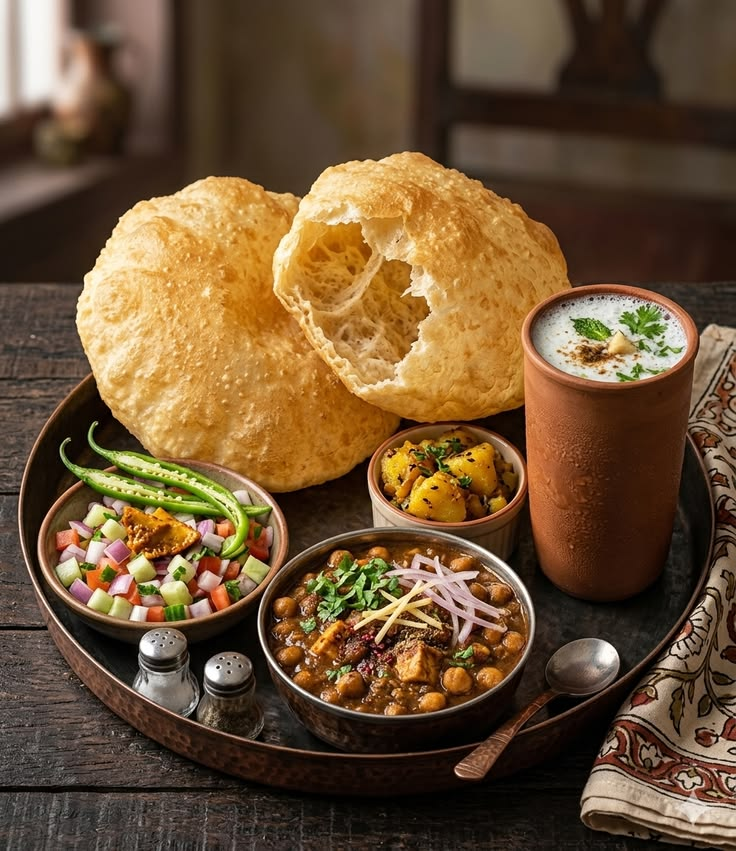
Chole is a Punjabi-Delhi chickpea curry: dark, spiced, tangy from dried mango powder, deeply savory.
It gets paired with either kulche (soft, tandoor-baked flatbread with a slightly crisp bottom) or bhature (a huge puffy deep-fried bread that arrives at the table balloon-like and deflates within a minute).
Chole kulche is the leaner street breakfast version, sold from carts across Delhi with sliced onions and green chilies on the side. Chole bhature is the heavyweight sit-down version,
the kind of meal you eat once and skip lunch after. Both are worth trying.
This is a Delhi street food, and while you can find versions in Punjab, Chandigarh, and even Mumbai,
the Delhi renditions are the reference. Head to Sita Ram Diwan Chand in Paharganj for the famous chole bhature, or the kulche carts in Chandni Chowk for the street version.
If you’re planning to combine Delhi with a broader Asia trip like I did after landing here from Bangkok, this is your first-morning meal.
Aloo Tikki Chaat
This mouthwatering, sweet, and savoury cutlet originated from the streets of old Delhi and has taken the whole country by storm. The dome-shaped Tikki is made from mashed potatoes and spices and is pan-fried till crispy. The Tikki is then served hot with a topping of chole, yoghurt, tamarind chutney, mint chutney, onion, coriander leaves, and an array of spices. You will also find numerous varieties of fried pastry chaat with other flavorful alterations of sauces, chutneys, and topping ingredients.
Momo
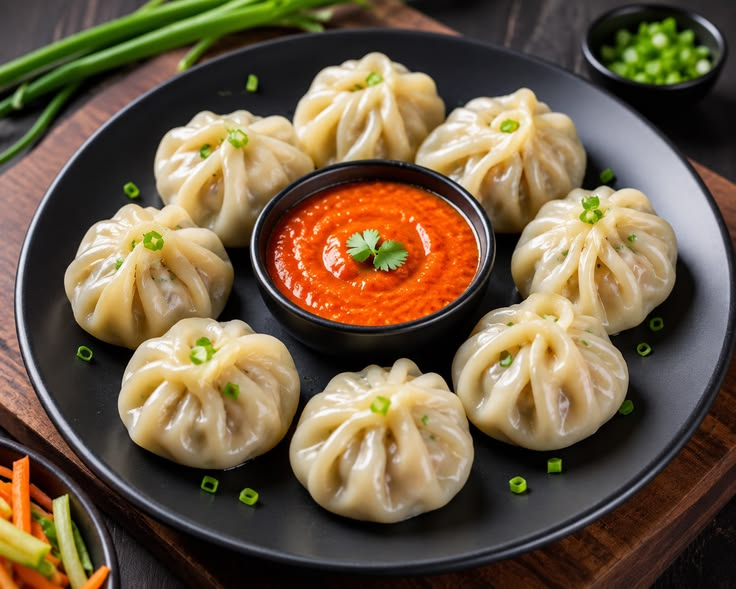
Travelled from Tibet to the northern states of India, these dumplings are avidly famous all over India. The dumplings are stuffed with various ingredients like cabbage, chicken, paneer, etc., and served with red chilli sauce. This street food will undoubtedly make your foodie spirit lively! If you land in India’s food capital, you will discover the momo stalls lining the streets.
Poha
Poha is a light and delicious street food popular in Madhya Pradesh, especially in Indore. It is a light and tasty dish made from flattened rice, peanuts, onions, potatoes, and mild spices. People often eat poha for breakfast. Sometimes it is served with sweet Jalebi, giving you both sweet and savoury flavours.
Litti Chokha
Litti Chokha is a traditional dish from Bihar and Jharkhand. It is similar to the Daal Bati Choorma from Rajasthan. Litti is a round wheat dough ball stuffed with roasted gram flour (sattu) and baked or roasted.
It is served with Chokha, a mashed mix of vegetables like eggplant, potatoes, and tomatoes, flavoured with spices and mustard oil. This hearty meal can be eaten any time of day and tastes even better when served with ghee.
Kulhad Chai
Chai in plastic cup is ordinary.
Chai in kulhad is an experience.
People in India really, like using eco- kulhad cups. Now vendors serve food and drinks in these kulhad cups. They are very popular. Vendors are using kulhad cups to serve lots of things.
Samosa
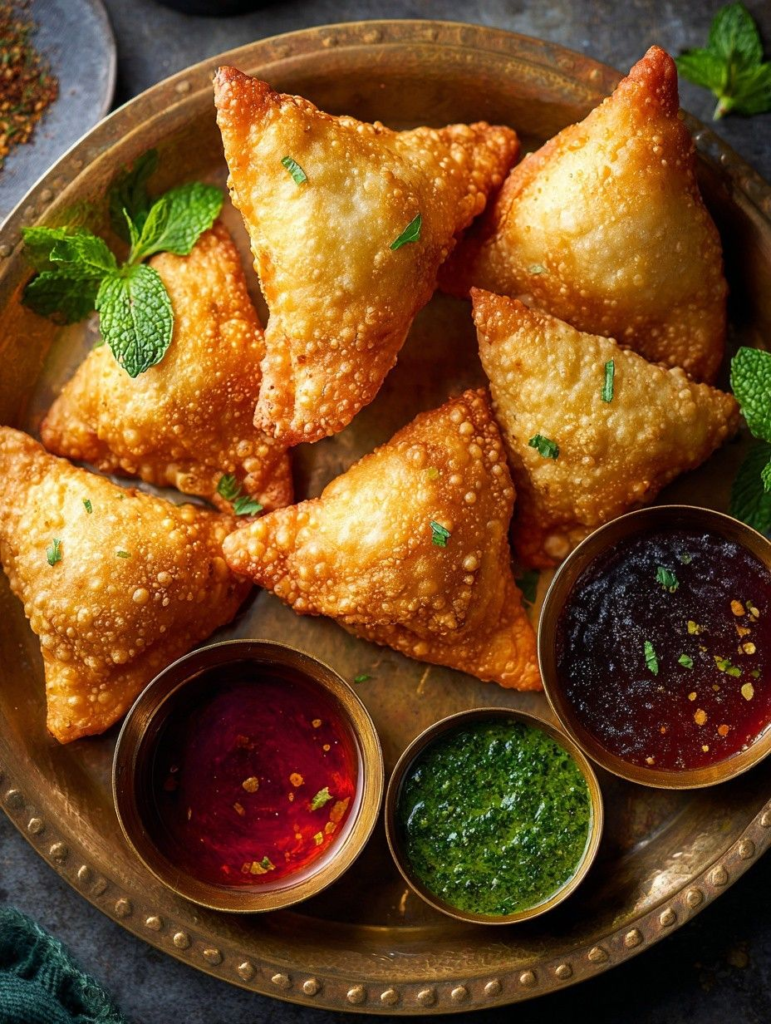
The samosa is India’s most exported snack for good reason. A crisp, flaky, triangular pastry shell wrapped around a filling of spiced mashed potato, green peas, cumin, coriander, and green chili, then deep-fried to a deep golden brown.
You eat it with a side of green mint chutney and sweet tamarind chutney, sometimes both drizzled on top if it’s samosa chaat.
The samosa is pan-Indian, sold at every train station, every bus stop, every roadside stall, and on every household tea tray at 5pm.
It’s the country’s default snack.
Regional variations get interesting. Punjabi samosas are large and heavily potato-forward.
Bengali shingaras are smaller and often stuffed with peanuts and cauliflower. Hyderabadi lukhmi samosas use meat. My rule:
pick a samosa that came out of the fryer within the last 15 minutes. A stale samosa is a sad samosa.
This is one of the indian street foods you must try in its regional variations across multiple cities, not just the first version you meet.
Vada Pav and Bhajiya Pav
Vada pav is the reason Mumbai works. Millions of office workers, students, and rickshaw drivers eat this 15 rupee snack every single day, and once you’ve had one you’ll understand why. The vada is a spicy mashed-potato patty coated in chickpea batter and deep-fried until crackling. The pav is a soft, slightly sweet white bread roll, sliced open, smeared with green cilantro-chili chutney on one side and sweet tamarind chutney on the other. The vada goes inside, gets a sprinkle of dry garlic chutney and a fried green chili on the side, and you eat it in 4 bites while standing on the sidewalk.
Bhajiya pav is the variation: instead of a potato patty, it’s crispy onion fritters (bhajiya) stuffed into the same pav with the same chutneys. It’s arguably even better. This is one of the indian street foods you must try in its home city, and no version outside Mumbai comes close. Head to Dadar, Kirti College, or the vendors outside Chhatrapati Shivaji Terminus during the evening rush.
Dosa
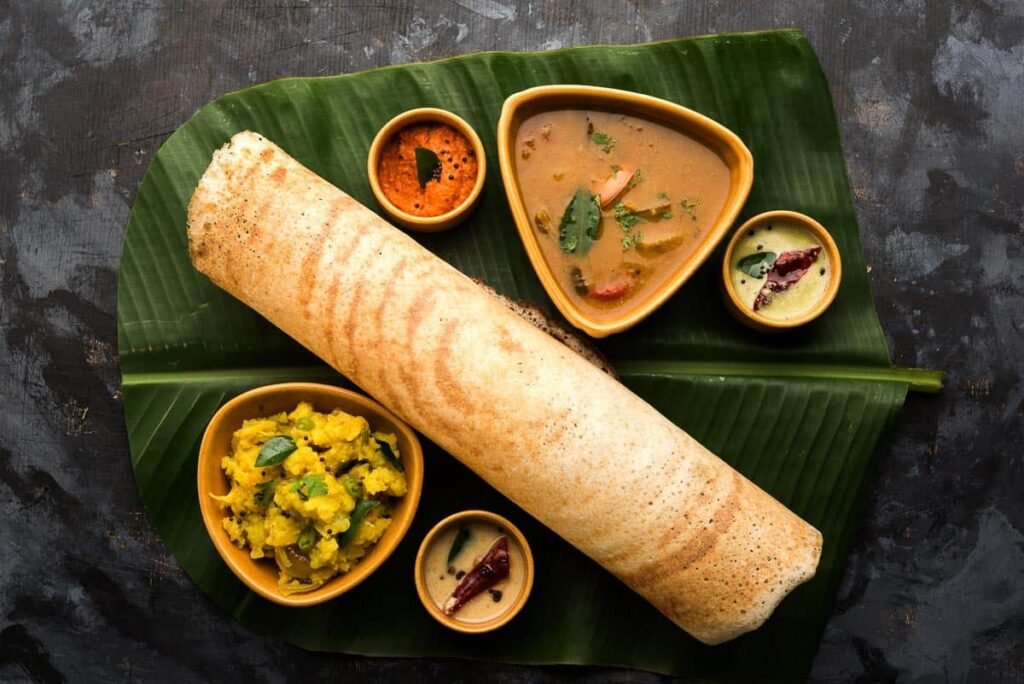
One of the traditional and popular cuisines of Southern India, Dosa has already won the heart of the entire nation and earned global recognition. Dosas are thin and crispy pancakes made from the fermented batter of rice and lentils. When cooked, these pancakes are rolled to serve plain or stuffed with a mildly spicy mix of mashed potatoes, onions, and masalas. This sumptuous dish is mainly served with a bowl of lentil-based vegetable stew called sambhar and fresh coconut chutney. Nutritious and yummy! So, are you ready to tantalise your taste buds?
Paratha
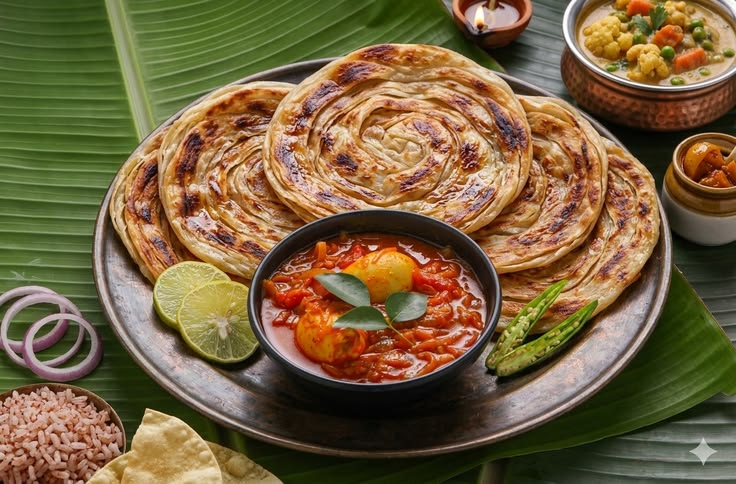
Our third flatbread found at street markets in India is not one to miss. Paratha is a crispy and chewy bread filled with ingredients like spicy potato, mixed vegetables and creamy paneer.
Visitors enjoy watching the vendors take the dough and stuff it with ingredients before cooking it on a hot plate.
This dish is a popular breakfast item but is a perfect snack any time of the day.
Street food is not just something people eat between meals. For many Indians, it is connected to memories and routines.
Falooda
Falooda is a dessert-drink hybrid that traces back to Persian faloodeh, brought to India by Mughal traders in the 16th century. It’s served in a tall glass and layered: rose syrup at the bottom, then chilled milk, then vermicelli noodles made from cornstarch or arrowroot, then basil seeds soaked until they turn into little jelly-coated pearls, then a scoop of kulfi (Indian ice cream) on top. You get a long spoon and a straw, and you’re supposed to attack it from both directions at once. It sounds like too much. It is exactly the right amount of much.
The best faloodas are in Mumbai and Hyderabad. Muhammad Ali Road in Mumbai during Ramadan is peak falooda season, when the street becomes an open-air food festival. In Hyderabad, try the Irani cafes in the Old City. If you liked the frozen desserts I flagged in my guide, the falooda is the Indian answer, but louder. It’s the dessert entry on this list of indian street foods you must try, and no one has ever finished one and regretted the order.
Why Street Food Matters Culturally
Street food is not just something people eat between meals. For many Indians, it is connected to memories and routines.
It might be the samosa someone bought after school, the pani puri shared with friends, the dosa eaten during a weekend outing, or the late-night roll grabbed after work.
These foods become part of personal history.
There is also an economic story behind every stall. Vendors have to manage ingredient costs, cooking time, customer demand, pricing, waste, and consistency. A small food cart can be a serious livelihood built around practical knowledge accumulated over many year
That is why street food deserves more respect than simply calling it “cheap food.” Behind a small plate is often a complicated system of sourcing, preparation, skill, and customer relationships.
FAQ’s
- What is the best Indian street food to try in 2026?
Popular choices include pani puri, samosa, chole bhature, vada pav, pav bhaji, dosa, kathi rolls, and aloo tikki. - What is the most popular Indian street food?
Pani puri, also known as golgappa or puchka, is one of India’s most popular and widely loved street foods. - Which Indian city is famous for street food?
Cities such as Delhi, Mumbai, Kolkata, Indore, Lucknow, Amritsar, and Hyderabad are renowned for their diverse street-food cultures. - What are the best vegetarian Indian street foods?
Pani puri, pav bhaji, vada pav, aloo tikki, dosa, samosa, and chole bhature are popular vegetarian options. - What Indian street food is best for breakfast?
Popular street-food breakfast choices include poha, kachori, jalebi, dosa, idli, and chole bhature.