
Living a healthy life requires more than just occasional attention to our well-being; it is about cultivating consistent habits that promote long-term health and happiness. As we step into 2026, it’s crucial to stay up to date with the latest health guidelines and practices. Advancements in health research and technology can inform more effective habits, ensuring we continue to live our best lives.
Nutrition also plays a key role in mental and emotional well-being. Poor eating habits, skipped meals, or excessive consumption of sugar and processed foods may contribute to low mood, irritability, reduced concentration, and stress-related eating. In contrast, consistent and nourishing meals support brain function, improve focus, and help manage stress levels, making nutrition an important part of new year resolutions for health and wellness.
Understanding the importance of nutrition helps shift new year health resolutions away from temporary diets and towards sustainable habits. When food choices are aligned with long-term well-being, they support not just physical health, but overall quality of life throughout the year.
Why Nutrition Matters for a Healthy Life?

Nutrition is the foundation of a healthy life and plays a central role in how the body functions each day. The foods consumed regularly influence physical strength, immunity, mental clarity, and the body’s ability to prevent and manage lifestyle-related conditions. This makes nutrition an essential focus when setting health goals for the new year.
A balanced and nutritious diet supports long-term health in several important ways:
- Supports daily energy and productivity: Regular, well-balanced meals help maintain steady energy levels and reduce fatigue caused by blood sugar fluctuations.
- Strengthens immunity: Adequate intake of essential nutrients supports immune function and helps the body recover from illness more effectively.
- Improves metabolic and heart health: Thoughtful food choices contribute to healthy weight management, balanced cholesterol levels, and stable blood sugar control.
- Promotes digestive well-being: Foods rich in dietary fibre support gut health, improve digestion, and prevent common digestive concerns.
Eating Windows Matter More Than You Think
The science: Time-restricted eating has been studied extensively over the past decade. Research from the Salk Institute, published in Cell Metabolism, demonstrates that when you eat matters almost as much as what you eat. Studies show that confining eating to a consistent 8-12 hour window can improve insulin sensitivity, support liver function, and align with your body’s circadian rhythms.
A 2022 study in Nature Communications found that late-night eating (within 2-3 hours of bedtime) disrupts circadian regulation of glucose metabolism, even when total calorie intake remains constant. The timing matters.
What this actually means for you:
The simplest protocol: Don’t eat for 1-2 hours after waking, and stop eating 2-3 hours before bed.
Swap snacks that sneak in sugar
One of the sneakiest sources of sugar and calories comes not from meals but from drinks and snacks. The flavoured latte at 11 am, the energy bar mid-morning, the bottled smoothie that’s basically just fruit juice concentrate.
Packaged snacks, even ones marketed as healthy, are often packed with sugar and refined carbs with little fibre or protein. They lose their whole food structure and are quickly digested. So they give you a quick hit and then the slump, which is why you find yourself hungry again an hour later.
Once in a while is fine, but day to day, they add up. They’re not great for your metabolic health, and they can disrupt your gut.
Instead of:
- Granola bars → Go for whole nuts and fruit, or yoghurt with berries
- Bottled smoothies or juice → whole fruit, or a homemade smoothie with yoghurt and seeds
- Fizzy drinks → sparkling water with lemon, berries, or homemade iced tea
- Energy drinks → green tea, coffee, or matcha
- Something sweet after a meal → fruit, a date with nut butter, or a square of good dark chocolate
One thing I recommend is to ask yourself a few questions before reaching for snacks. Are you eating out of boredom, emotion or habit? Or are you actually craving because you haven’t had enough protein that day? Just becoming aware can shift how you eat.
Get Smart About Meal Planning and Shopping
Let’s be honest: the battle for healthier eating is usually won or lost at the grocery store. What you bring into your kitchen directly dictates what you’ll eat, especially on those hectic weeknights. If you can get a handle on your shopping, you’re already halfway to your goal.
Think of a meal plan not as a rigid, stressful schedule, but as a rough sketch for your week. You don’t need to plan every single meal down to the minute. Just jotting down three or four dinner ideas, a couple of options for lunch, and your usual breakfast rotation is enough. This simple framework gives you direction without making you feel trapped.
Smart Snacking Strategies for Busy Lifestyles
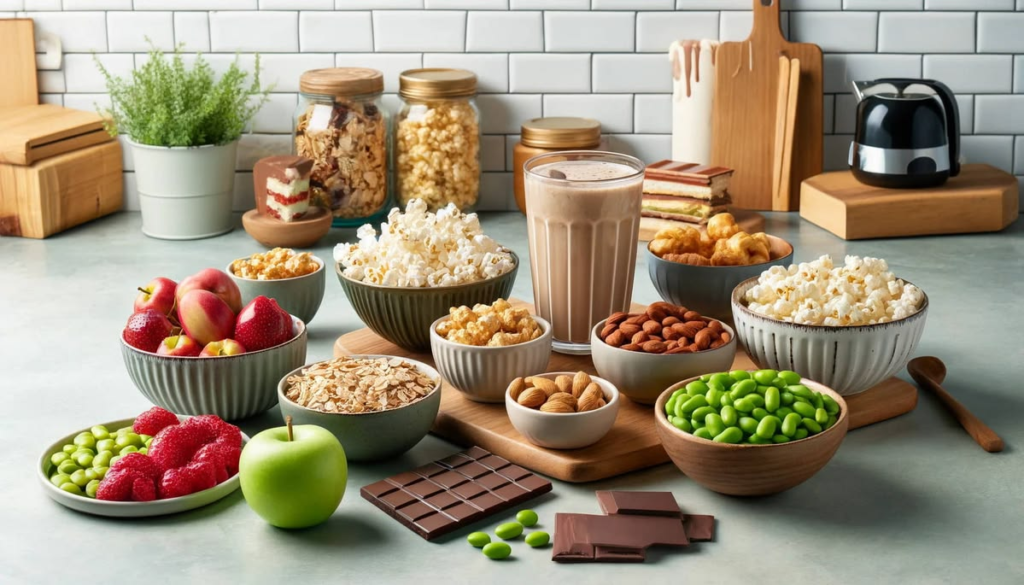
Snacking has a bad reputation, often seen as the thing that sabotages our best-laid health plans. But that’s not the whole story. When you get smart about it, snacking is actually an incredible tool for keeping your energy steady, managing hunger, and preventing those desperate, poor choices we make when we’re starving. Mastering the art of the smart snack is a game-changer, especially for those of us with jam-packed schedules.
The trick isn’t to stop snacking altogether. It’s about snacking with a purpose. This means reaching for foods that actually give you something back—think fiber, protein, and healthy fats—not just the empty calories and sugar that send you on a rollercoaster ride of energy spikes and crashes. A good snack should leave you feeling sharp and satisfied, not sluggish and craving your next fix.
Stock your freezer with healthy staples
Frozen foods are underrated. They’re cheap, quick to cook and packed with nutrients. A lot of frozen fruit and veg are actually frozen at peak ripeness, locking in nutrition. Sometimes they’re even better than what’s been sitting on shelves.
So I always have freezer staples:
- Frozen proteins like minced lean beef, chicken bones to make broth.
- Leftover batch-cooked meals
- Berries & avocado
- Peas, edamame, spinach, kale, mixed veg, pre-chopped onions
These are great whole foods to keep on hand when there’s no time to shop or cook. They’re my safety net to add more nutrients to any meal.